
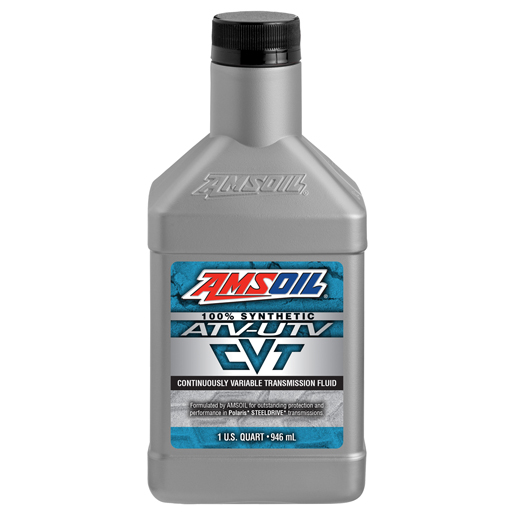
AMSOIL 100% SYNTHETIC ATV/UTV CONTINUOUSLY VARIABLE TRANSMISSION FLUID
Product codes and package options
| Product Code | Package Size | Unit of Measure |
|---|---|---|
| AUCVTQT-EA | Quart Bottle | Each |
| AUCVTQT-CA | Quart Bottle | Case of 12 |
Use AMSOIL 100% Synthetic ATV/UTV Continuously Variable Transmission Fluid when the service chart calls for fluid in a Polaris STEELDRIVE CVT. That box does not shift through gears. It squeezes a belt between pulley faces, so drive depends on grip as much as film. Match the STEELDRIVE callout before the fill plug comes out, because an automatic transmission fluid with a close viscosity number still brings the wrong friction behavior.
Match the STEELDRIVE callout
Start with the transmission name in your model-year maintenance chart. Polaris STEELDRIVE CVT is the target, and CVT by itself is not enough. Belt-and-pulley drives vary by design, so a fluid that works in one CVT family can be wrong for the next housing on the bench.
Check each compartment on its own. A side-by-side can have a CVT, a front drive, a rear gearcase, and an engine sump sitting close together with different fluids in each one. Keep this product in the STEELDRIVE CVT service point and use the factory chart for capacity and level procedure.
Keep the belt from shuddering
A CVT belt has to bite the pulley faces without grabbing, slipping, or chattering. This formula is built with exceptional friction properties to reduce shudder, keep operation smooth, and help extend transmission life when the machine crawls, climbs, or pulls under changing belt load.
Wet-clutch compatibility matters anywhere a clutch pack shares the fluid. Engagement quality comes from the additive package, not just the thickness on a data sheet. If the friction behavior is wrong, the clutch can act wrong even when the viscosity looks close enough to tempt a shortcut.
Protect it when the load gets ugly
Add passengers, tools, a full bed, and a steep trail, then the CVT sees pressure that a light-duty fill never had to handle. Severe service can shear oil and thin the film. This fluid resists extreme pressure and protects heavily loaded, high-torque CVTs when the belt and pulleys are working hard.
The ASTM D4172 four-ball wear test shows a 0.43 mm scar at 75°C, 1,200 rpm, a 40 kg load, and one hour. That scar is the mark worn into three clamped balls by a fourth spinning in the fluid. Use the number as a bench comparison for film strength, not as a fitment shortcut.
Read the numbers before winter
Kinematic viscosity is 35.6 cSt at 40°C and 7.4 cSt at 100°C under ASTM D445, with an ASTM D2270 viscosity index of 182. Flash and fire points are 220°C (428°F) and 236°C (457°F) under ASTM D92, so treat them as open-cup handling numbers, not gearbox temperature targets.
Cold flow is measured separately. Brookfield viscosity is 9,150 cP at -40°C under ASTM D2983, and the ASTM D97 pour point is -46°C (-51°F). Pour point only tells you when a lab sample still moves, but good cold flow helps the gearbox respond cleanly after a night outside.
AUCVTQT-EA is the single quart and AUCVTQT-CA is the case of twelve. Follow the original equipment manufacturer's oil change recommendation for your machine. The fluid is Warranty Secure, carries the AMSOIL Limited Warranty (G1363), and used oil belongs in recycling.
Verified specifications
| Property | Value | Test Method |
|---|---|---|
| Kinematic Viscosity @ 100°C, cSt | 7.4 | ASTM D445 |
| Kinematic Viscosity @ 40°C, cSt | 35.6 | ASTM D445 |
| Viscosity Index | 182 | ASTM D2270 |
| Brookfield Viscosity @ -40°C, cP | 9,150 | ASTM D2983 |
| Flash Point, °C (°F) | 220 (428) | ASTM D92 |
| Fire Point, °C (°F) | 236 (457) | ASTM D92 |
| Pour Point, °C (°F) | -46 (-51) | ASTM D97 |
| Four-Ball Wear Test (75°C, 1200 rpm, 40 kg, 1 hr), mm | 0.43 | ASTM D4172 |
Questions about AMSOIL 100% SYNTHETIC ATV/UTV CONTINUOUSLY VARIABLE TRANSMISSION FLUID
Use it only when your maintenance chart calls for fluid in a Polaris STEELDRIVE CVT. Polaris builds several drivetrain designs, and the STEELDRIVE name is the part that matters here. Check the model year and the exact compartment before you pour.
No. A geared automatic and a belt-and-pulley CVT need different friction behavior. Close viscosity numbers do not make the fluids interchangeable, because the CVT belt needs a grip package that holds the pulley faces without shudder.
It comes from ASTM D4172 at 75°C, 1,200 rpm, a 40 kg load, and one hour. A fourth ball spins against three clamped balls, then the scar is measured. Smaller scars point to stronger bench-test film protection, but fitment still comes from the service chart.
Yes. The formula is wet-clutch compatible, which matters when a clutch pack shares the same fluid as the rest of the transmission. The clutch still has to be in an application that calls for this STEELDRIVE CVT fluid.
Brookfield viscosity is 9,150 cP at -40°C, and the ASTM D97 pour point is -46°C (-51°F). Those are laboratory values rather than a machine operating limit, but they tell you the fluid keeps moving during serious cold starts.
Follow the original equipment manufacturer's oil change recommendation for your exact machine and compartment. Capacity, drain interval, and level-check procedure all come from the same service information, not from the bottle.
Related products in this category
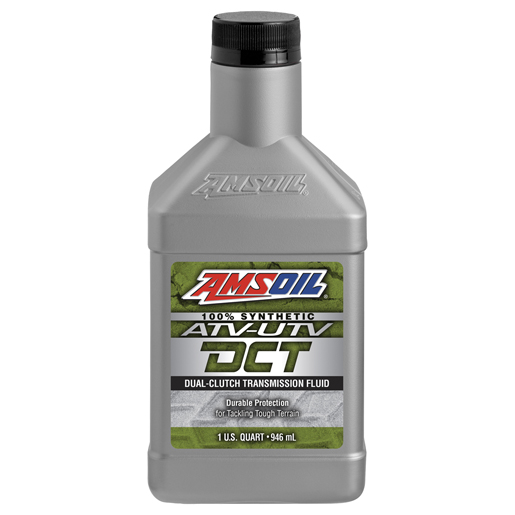
AMSOIL 100% SYNTHETIC ATV/UTV DUAL-CLUTCH TRANSMISSION FLUID
Dual-clutch fluid for Can-Am Maverick R gearboxes that need steady synchronizer engagement and film strength under loaded gears.
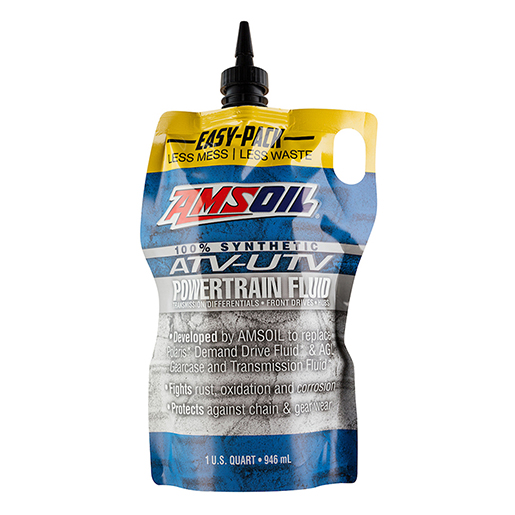
AMSOIL 100% SYNTHETIC ATV/UTV POWERTRAIN FLUID
Demand Drive and AGL replacement for listed Polaris housings, plus wet-brake ATV and UTV applications, with a hard no on API GL-5 service.
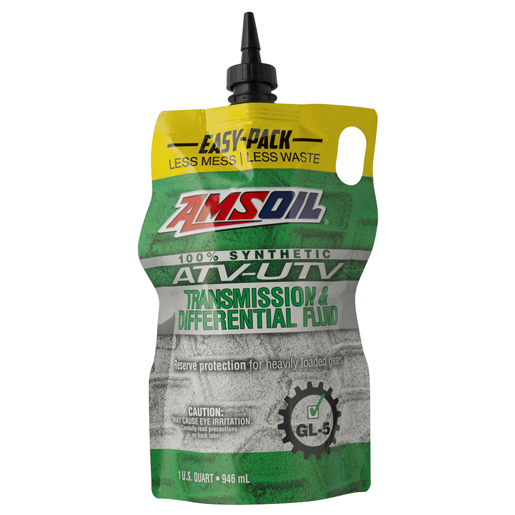
AMSOIL 100% SYNTHETIC ATV/UTV TRANSMISSION & DIFFERENTIAL FLUID
API GL-5 synthetic gear fluid for ATV and UTV transmissions and differentials that see towing, plowing, hauling, and rough terrain.