
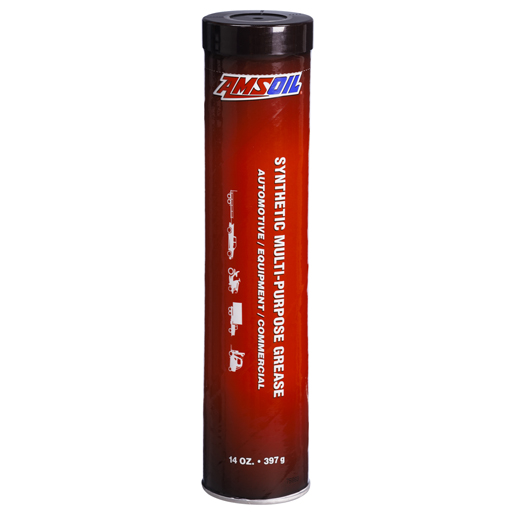
AMSOIL Synthetic Multi-Purpose Grease
Product codes and package options
| Product Code | Package Size | Unit of Measure |
|---|---|---|
| GLCCR-EA | 14 oz. Cartridge | Each |
| GLCCR-CA | 14 oz. Cartridge | Case of 10 |
| GLCCR-PK | 14 oz. Cartridge | Packs of 40 |
| GLC35-EA | 35 lb. Lug | Each |
| GLC99-EA | 120 lb. Keg | Each |
| GLC40-EA | 400 lb. Drum | Each |
AMSOIL Synthetic Multi-Purpose Grease is the red cartridge to keep beside the grease gun when your ATV, trailer, mower, or shop equipment calls for a standard Grade 2 grease. It uses synthetic base oil and a calcium sulfonate complex thickener, meets NLGI GC-LB and HPM, and carries a 620 kgf four-ball weld point. Use it on wheel bearings, chassis points, A-arm bushings, trailer spindles, and other fittings that match the grade and service rating. If the chart asks for water-resistant WR grease or a different consistency, follow that chart.
Load the gun for common zerks
Reach for this cartridge when the fitting calls for NLGI Grade 2 grease and the service chart accepts GC-LB or HPM performance. Wheel bearings, suspension points, automobiles, trailers, landscaping equipment, farm equipment, and powersports machines all sit in the listed range, from light-duty chores to heavier shop work.
Do not treat a long application list as permission to grease everything the same way. Your ATV hub, UTV pivot, or trailer spindle is a fit when its own manual asks for this grade and rating. A wet-only hub, sealed assembly, or different-grade fitting gets the grease named in its chart.
Decode Grade 2, GC-LB, and HPM
NLGI Grade 2 is the familiar cartridge stiffness that pumps through a hand gun and stays put in most wheel-bearing and chassis work. Worked penetration is 280 after 60 strokes under ASTM D217, which lands this grease in that Grade 2 band.
GC covers wheel-bearing service and LB covers chassis service. GC-LB on the tube means the grease cleared both service classifications, while HPM adds the newer NLGI High-Performance Multiuse core specification. Those marks matter when your maintenance chart calls out a rating instead of a brand.
Keep the terms separate in your head. Grade is consistency, GC-LB is service, and HPM is a performance specification. When a component asks for the same combination, this grease qualifies. When it asks for WR water resistance or another grade, step to the product that carries that tag.
Check the thickener and load numbers
The grease uses synthetic base oil in a calcium sulfonate complex thickener. That thickener is why the finished product is red, smooth, and tacky, and it helps the grease cling to turning metal instead of squeezing out of the loaded spot. Base oil viscosity is 170 cSt at 40°C.
Four-ball weld point is 620 kgf under ASTM D2596, Timken OK Load is 65 lb. under ASTM D2509, and the ASTM D2266 four-ball wear scar is 0.40 mm. Use those numbers to compare greases on test steel, not to guess the life of one bearing on one machine.
That load package is why this red grease makes sense for hubs, pivots, and spindles that work under real weight. A tacky film with strong EP performance keeps metal surfaces separated when the machine is bouncing, towing, or turning under load.
Plan for heat, water, and cold
The operating range is -40°F to 350°F (-40°C to 177°C). Dropping point is above 600°F (316°C) under ASTM D2265, which tells you where the thickener lets the first drop of oil fall in a lab. Do not use that as the continuous service temperature.
High-temperature bearing life is 120 hours under ASTM D3527. Water washout is 1.5 percent under ASTM D1264, oil separation is 0.49 percent under ASTM D1742, leakage is 2.3 g under ASTM D4290, and the grease passes ASTM D1743 rust and corrosion testing.
Low-temperature torque is 8.6 N·m at -40°C under ASTM D4693, so the grease still turns in a chilled bearing and still pumps through a fitting. If your hub lives in creek water or pressure-washer spray, compare it against the blue water-resistant grease with the WR tag and 0.8 percent washout.
Grease without cooking the bearing
Wipe the zerk before the coupler goes on. Dirt on the fitting gets pushed straight into the housing, and that grit becomes the wear problem you were trying to avoid. Pump until fresh grease shows where the service procedure expects it, not until the cavity is packed solid.
Keep bearing housings one-third to one-half full. A full cavity churns the grease, builds heat, and shortens the life of the lubricant and the bearing. Periodic teardown, cleaning, and repacking still matter because a grease gun cannot remove water, sand, or old hardened material.
The grease is compatible with many other greases, but clean out the old product when you can. If you cannot, flush with a liberal amount while the mechanism turns and watch the purge. GLCCR-EA is the 14 oz. cartridge, with case, pack, 35 lb. lug, 120 lb. keg, and 400 lb. drum options.
Verified specifications
| Property | Value | Test Method |
|---|---|---|
| Thickener | Calcium Sulfonate Complex | |
| NLGI Consistency Grade | 2 | |
| NLGI Performance Grade | GC-LB, HPM | |
| Operating Range °F (°C) | -40 to 350 (-40 to 177) | |
| Penetration, worked 60 strokes | 280 | ASTM D217 |
| Dropping Point °F (°C) | >600 (>316) | ASTM D2265 |
| High-Temperature Life, hours | 120 | ASTM D3527 |
| Water Washout, % | 1.5 | ASTM D1264 |
| Rust and Corrosion | Pass | ASTM D1743 |
| Oil Separation, % loss | 0.49 | ASTM D1742 |
| Leakage, g lost | 2.3 | ASTM D4290 |
| Four-Ball Wear Test, mm scar | 0.40 | ASTM D2266 |
| Four-Ball EP Weld Point, kgf | 620 | ASTM D2596 |
| Timken OK Load Test, lbs | 65 | ASTM D2509 |
| Low-Temperature Torque, N·m (-40°C / -40°F) | 8.6 | ASTM D4693 |
| Base Oil Viscosity @ 40°C, cSt | 170 | |
| Color | Red | |
| Texture | Smooth with tack |
Questions about AMSOIL Synthetic Multi-Purpose Grease
It is an NLGI Grade 2 grease made with synthetic base oil and a calcium sulfonate complex thickener. It meets NLGI GC-LB and HPM, has worked penetration of 280 under ASTM D217, and uses a base oil rated at 170 cSt at 40°C.
Yes, when the hub calls for an NLGI Grade 2 grease and accepts GC-LB or HPM performance. Wheel bearings and suspension points are central uses for this product, but the maintenance chart for your machine still decides the correct grease.
Both are Grade 2 calcium sulfonate complex greases with GC-LB, a 620 kgf weld point, a 65 lb. Timken OK Load, and a -40°F to 350°F range. The red grease adds HPM and posts 1.5 percent washout, while the blue grease adds WR and posts 0.8 percent washout.
No. The dropping point above 600°F (316°C) is a lab measure of when the thickener releases oil. The published operating range stops at 350°F (177°C), and that is the number to use when you choose grease for a bearing or chassis point.
Hold the housing to one-third to one-half full unless the service manual says otherwise. More grease is not extra protection. A packed cavity churns, builds heat, and can shorten bearing and grease life.
It is compatible with many other greases, so a small mix usually will not react. Clean the old product out when possible. If you cannot, flush with a liberal amount of the red grease while the mechanism turns and watch for any inconsistency.
Related products in this category
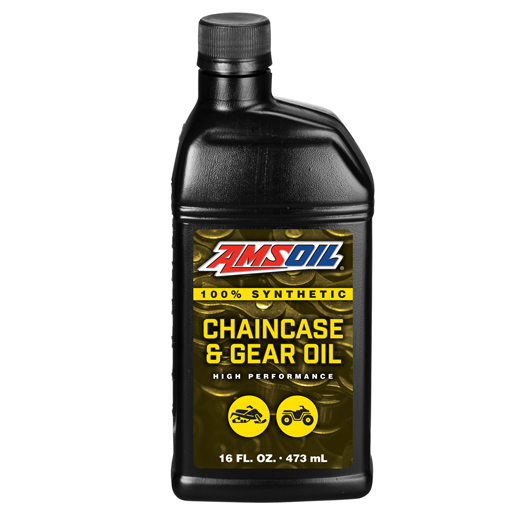
AMSOIL 100% SYNTHETIC CHAINCASE & GEAR OIL
Synthetic EP chaincase oil for sleds, ATVs, gearcases, and Diamond Drive housings that still flows at -51°F.
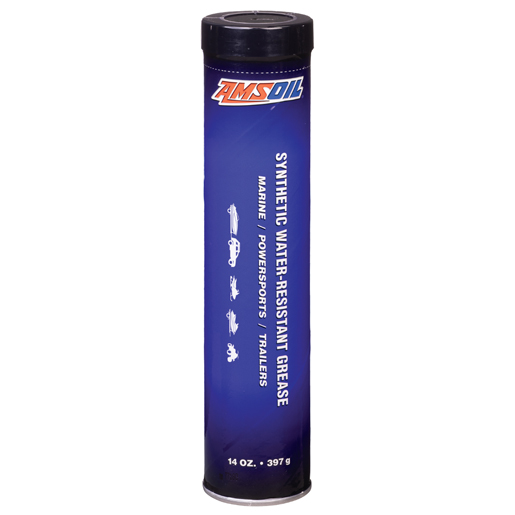
AMSOIL Synthetic Water-Resistant Grease
Blue NLGI 2 GC-LB grease with HPM+WR, 0.8 percent water washout, and 0 percent oil separation for wet hubs.
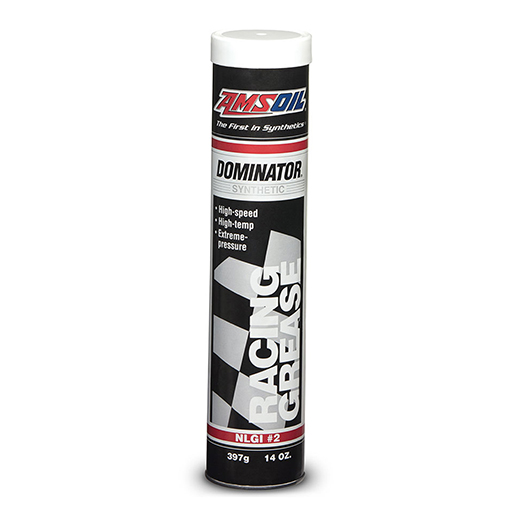
AMSOIL DOMINATOR® Synthetic Racing Grease
Race-duty NLGI 2 GC-LB grease for hot, fast, loaded hubs with 0.5 percent washout and 220 hours of bearing life.