
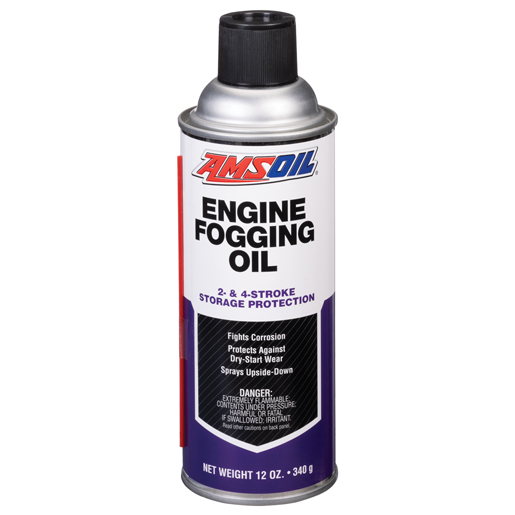
AMSOIL ENGINE FOGGING OIL
Product codes and package options
| Product Code | Package Size | Unit of Measure |
|---|---|---|
| FOGSC-EA | 12 oz. Spray Can | Each |
| FOGSC-CA | 12 oz. Spray Can | Case of 12 |
Park a machine for a season and the damage starts without anyone touching it. AMSOIL Engine Fogging Oil is a rust preventive built to coat the inside of an engine while it sits, and its film retention is what carries that protection through months of storage instead of weeks. You get corrosion protection on the parts condensation attacks first, plus a wet cylinder wall waiting for the first crank in spring instead of a dry one. Two-stroke and four-stroke engines are both covered, from quads, bikes, and sleds to outboards, chainsaws, generators, and farm and construction equipment. Your equipment owner's manual tells you where to spray it and how much.
Condensation is what eats a parked engine
Seasonal machines sit far more than they run. Every swing between a warm afternoon and a cold night pushes water vapor out of the air inside the engine and onto the metal as condensate, and a machine stored through one winter goes through that cycle dozens of times.
That is ordinary physics rather than a defect in your machine. It is also why the problem builds steadily through a layup instead of showing up all at once, and why a bike stored six months comes out worse than one stored six weeks.
The parts that corrode first
Where condensate touches steel and iron, surface corrosion forms on cylinder liners, piston rings, anti-friction bearings, and the steel and iron contact faces on rotational seals. Every one of those runs against a mating surface at a tight clearance, so even light rust changes how the engine feels afterward.
Long storage also dries the cylinders out, and a dry start often does permanent damage the moment you hit the button. That happens in the first few seconds of cranking, before oil has moved anywhere, which is why nobody sees it coming.
Why leftover motor oil is not enough
Most two-stroke and four-stroke motor oils cling to component surfaces and act as a barrier that keeps condensate off the metal. Fresh oil in a running engine does that job well, and the residual film after shutdown keeps doing it for a while.
Time is the catch. That protection fades, so the film covering a two-week gap between rides is not the film you have six months later. Better film retention is exactly what closes that gap, and it is the reason a dedicated product exists for a job oil already does briefly.
An aerosol reaches what a pour never will
Spraying puts oil where gravity will not. A pour runs to the bottom of whatever it enters, while a mist hangs in the chamber and settles on surfaces at every angle, which is why the aerosol format covers more components and distributes the oil more completely.
That helps most on horizontal cylinders like the ones in an outboard. The upper bore wall is the surface poured oil runs right past, and it is the first surface the rings touch when the engine turns over again after a layup.
Where to spray it and how to handle the can
Take the procedure from your equipment owner's manual. Access points, timing, and quantity change from one engine design to the next, and the range here runs from motorcycles, sleds, quads, and personal watercraft through outboards, stern drive and inboard marine engines, mowers, chainsaws, snowblowers, generators, scooters, farm and construction equipment, cars, and trucks.
The oil is brown, runs 5 cSt at 40°C (104°F), and carries a slight solvent odor. The alarming numbers on the label belong to the propane propellant rather than the oil, including a boiling point of -42°C (-43.6°F) and a flash point of -104°C (-155.2°F), which is why the can is treated as a flammable aerosol that may explode if heated.
Work outdoors or with real ventilation, clear of heat, hot surfaces, sparks, and open flames. It irritates skin, can cause drowsiness or dizziness, and may be fatal if swallowed and it enters your airways, so stay out of the mist and wash up afterward. FOGSC-EA is the 12 oz. can and FOGSC-CA the case of twelve, and distribution does not include Canada.
Questions about AMSOIL ENGINE FOGGING OIL
It holds a film on the cylinder liners, piston rings, anti-friction bearings, and the steel and iron contact surfaces on rotational seals, which are exactly the parts condensate attacks first. Film retention is what keeps that barrier alive through a full layup instead of only the first few weeks.
Temperature swings during storage turn water vapor inside the engine into condensate, and wherever it touches steel or iron you get surface corrosion. Long storage also dries out the cylinders, and dry-starting a machine in that condition often does permanent damage in the first seconds of cranking.
Your equipment owner's manual decides. Access points and prep differ enough between engine designs that no single location, timing, or quantity carries over. The range runs from quads and sleds to outboards, generators, and chainsaws, so pull the procedure for your exact engine.
Motor oils do cling to component surfaces and act as a barrier against condensate, but that effectiveness drops off over time. A residual film that covers a short gap between rides is a much weaker defense across a full season, which is the gap this product fills.
Yes, and that is one of the reasons for the aerosol format. Complete distribution matters most on horizontal cylinders like an outboard, where a suspended mist settles on the upper bore wall that poured oil runs straight past. That wall is where the rings make contact first.
It is a flammable aerosol with gas under pressure, so keep it outdoors or well ventilated, clear of heat, sparks, and open flames, and never pierce or burn it even after use. FOGSC-EA is the 12 oz. can and FOGSC-CA the case of twelve. Distribution does not include Canada.
Related products in this category
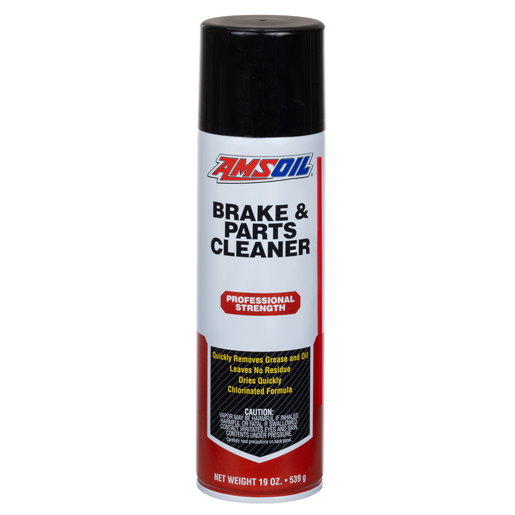
AMSOIL BRAKE AND PARTS CLEANER
Chlorinated, non-flammable brake cleaner that cuts oil and grease off pads, calipers, and drums without pulling the whole assembly apart.
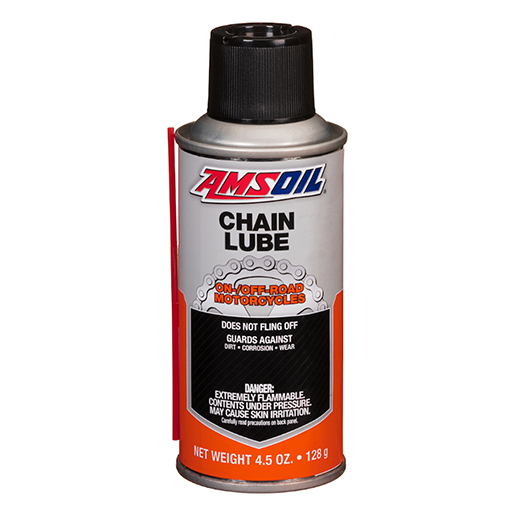
AMSOIL CHAIN LUBE
Fast-drying aerosol that soaks into the pins, bushings, and rollers on a sealed chain, then sets into a film that shrugs off sand and grit.
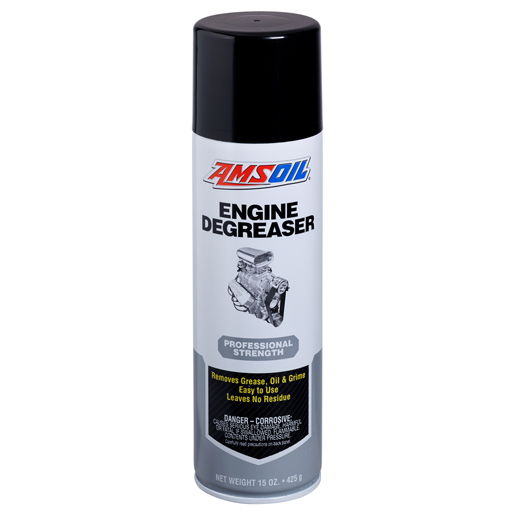
AMSOIL ENGINE DEGREASER
Professional-strength aerosol solvent that breaks down cooked-on engine grime in 15 minutes and rinses off with plain water, no parts washer needed.