
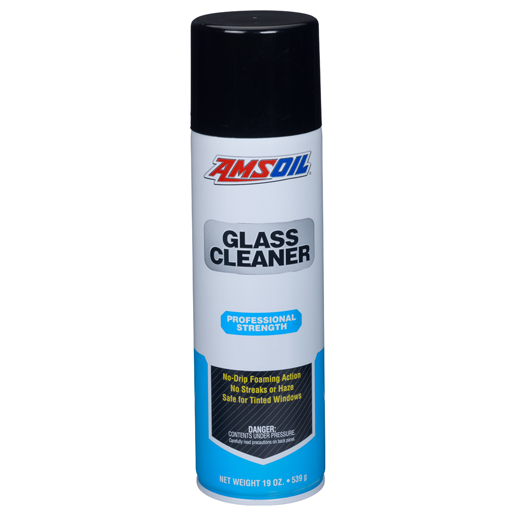
AMSOIL GLASS CLEANER
Product codes and package options
| Product Code | Package Size | Unit of Measure |
|---|---|---|
| AGCSC-EA | 19 oz. Spray Can | Each |
| AGCSC-CA | 19 oz. Spray Can | Case of 12 |
Spray a thin liquid on an upright windshield and most of it runs down onto the bodywork before it cleans anything. AMSOIL Glass Cleaner comes out as a white foam that stays where you put it, cuts through grease and grime faster than other leading glass cleaners, and polishes off with no streaks and no haze. There is no ammonia in it, which is why it is safe on all glass including tinted windows, and the same can works on countertops, mirrors, and appliances. Keep it off hot glass and off non-glass flat-panel screens, and test aftermarket tint film on a small hidden spot before you go over a whole panel.
Glass, tint, and the panels that are not glass
Windows, mirrors, and other glass surfaces are the target, and the same can cleans countertops and appliances around the shop or the kitchen. Ammonia is the ingredient most often blamed for wrecking window film, and leaving it out is what makes the formula safe on all glass, tinted windows included.
Material decides the answer, not shape. A UTV cab enclosure, a trail windshield, or a hand guard is often acrylic or polycarbonate rather than glass, and those panels fall outside a product scoped to glass. Figure out what you are looking at before the first spray, because polishing will not fix a hazed plastic panel.
Foam that holds its spot on a vertical panel
The foam does not run or drip, so it stays in contact with the dirt it landed on. On an upright windshield that is the whole difference, since a thin liquid drains onto the bodywork and seals before it does any work near the top of the glass.
Dwell time is what cuts grease. A cleaner that stays put spends its working life on the panel instead of pooling at the base of the frame, which is how it gets through grease and grime faster than other leading glass cleaners. Polish it dry and the glass comes out free of streaks and haze.
Distance, technique, and the right cloth
Shake it, hold the can upright, and stay 8 to 12 inches off the surface. That distance lays down an even layer of foam instead of a soaked spot in the middle, which is the difference between one wipe and three. Spray the panel, then polish it dry with a paper towel or a clean cloth.
Use a lint-free cloth with no fabric softener in it. Softener residue transfers onto glass and shows up as smearing the first time you drive into low sun, which undoes the streak-free finish you just got. A towel washed without softener, or a fresh paper towel, avoids the whole problem.
Hot glass, tint film, and screens
Two limits are stated outright. Do not use it on hot surfaces, so pull a windshield that has been baking in the sun into the shade and let it cool before you spray. Do not use it on non-glass flat-panel televisions either, which puts display screens off the list.
Aftermarket tint gets its own step. Test a small inconspicuous area first to make sure the film is not altered, because factory tinted glass and an applied film are different materials with different tolerances. Safe on all glass covers the glass, and the test covers whatever has been stuck to it.
Working time, storage, and the can
The cleaner evaporates slower than ether, which is what gives the foam enough working time to be spread and polished instead of flashing off as it lands. On a big windshield, where one section takes several seconds to cover, that margin decides whether you make one pass or two. The scent is mild rather than sharp, which helps indoors.
It is a Level 1 aerosol under UN 1950, the lowest of the three flammability levels, and it is neither explosive nor oxidizing. The spray and mist can still irritate your airways, and repeated exposure can dry or crack skin, so ventilate the space and pull on gloves for a long session.
Keep the pressurized can out of sunlight, in a well-ventilated spot, and below 50°C (122°F), which rules out a parcel shelf in July or a shelf above a heater. Never pierce or burn it. AGCSC-EA is the single 19 oz. can and AGCSC-CA the case of twelve, and aerosol disposal follows local rules rather than the household recycling bin.
Questions about AMSOIL GLASS CLEANER
Yes, as long as the panel is glass. The ammonia-free formula is safe on all glass, tinted windows included. Aftermarket tint film is a different animal, so test a small inconspicuous area first to confirm nothing changes, since applied film and factory tinted glass are not the same material.
Eight to 12 inches, upright, after a good shake. That distance lays down an even layer of foam rather than a concentrated wet spot, then you polish the panel dry with a paper towel or a clean cloth. A lint-free cloth with no fabric softener gives the cleanest finish.
It is built that way. Foaming action that does not run or drip keeps the cleaner against the dirt instead of draining onto bodywork and seals, and that dwell time on the glass is what lets it cut grease and grime faster than other leading glass cleaners.
No. It is not for use on hot surfaces, so move the machine into the shade and let the glass cool first. Non-glass flat-panel televisions are the other stated exclusion, which keeps display screens off the list. Both limits are spelled out rather than left to judgment.
A lint-free one with no fabric softener. Softener residue transfers onto glass and shows up as smearing in low sun, cancelling out the finish the foam gave you. A fresh paper towel works too, as long as you polish until the panel is completely dry instead of letting it air off.
Out of sunlight, in a well-ventilated place, below 50°C (122°F), and away from heat, sparks, open flames, and hot surfaces. The can is pressurized and never gets pierced or burned, even empty. Aerosol disposal can differ from other waste, so follow the rules where you live.
Related products in this category
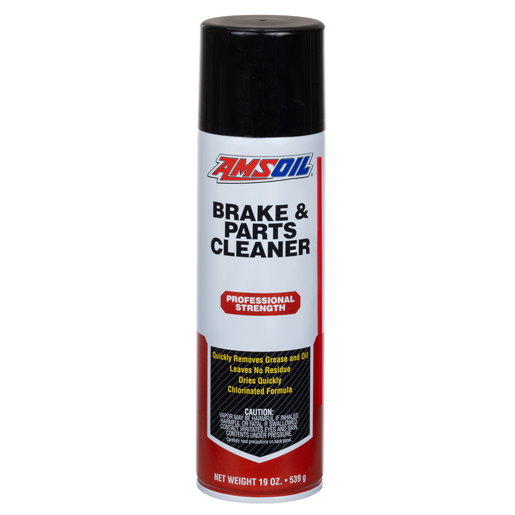
AMSOIL BRAKE AND PARTS CLEANER
Chlorinated, non-flammable brake cleaner that cuts oil and grease off pads, calipers, and drums without pulling the whole assembly apart.
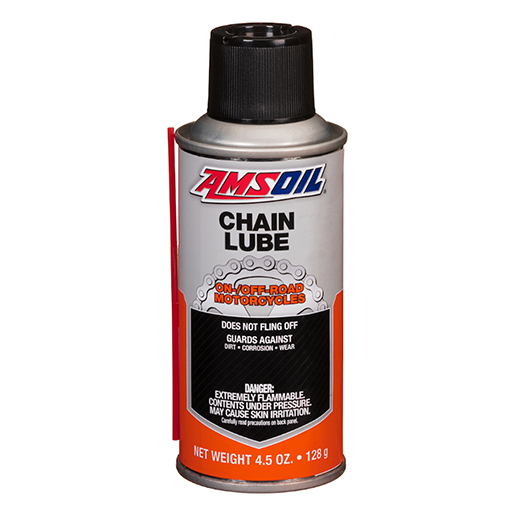
AMSOIL CHAIN LUBE
Fast-drying aerosol that soaks into the pins, bushings, and rollers on a sealed chain, then sets into a film that shrugs off sand and grit.
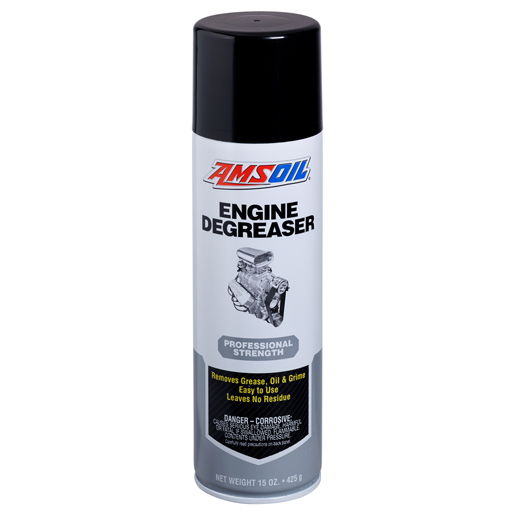
AMSOIL ENGINE DEGREASER
Professional-strength aerosol solvent that breaks down cooked-on engine grime in 15 minutes and rinses off with plain water, no parts washer needed.