
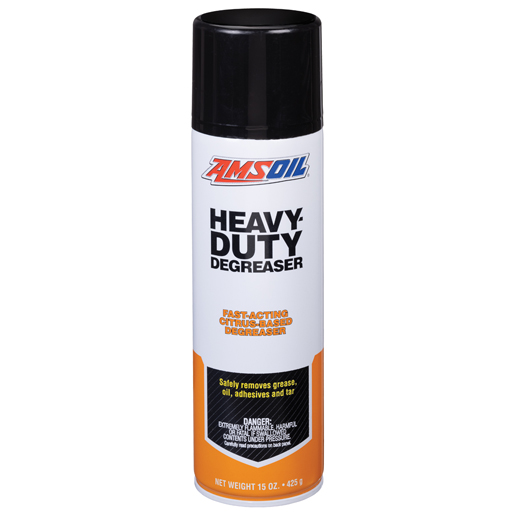
AMSOIL HEAVY-DUTY DEGREASER
Product codes and package options
| Product Code | Package Size | Unit of Measure |
|---|---|---|
| ADGSC-EA | 15 oz. Spray Can | Each |
| ADGSC-CA | 15 oz. Spray Can | Case of 12 |
Some grime has been building on a machine for years, and scrubbing at it is a wasted afternoon. AMSOIL Heavy-Duty Degreaser goes after petroleum-based grime at the molecular level and breaks its grip on metal, concrete, and whatever else it has attached itself to. The citrus formula is low in volatile organic compounds, does not foam, and leaves a clean smell behind instead of a petroleum one. Point it at metal, oil-stained concrete, adhesive residue, heavy equipment, gears and chains, powersports machines, and farm equipment. The routine is short: spray it on, let it work one to two minutes, wipe off the overspray, then take the loosened mess away with a rag or a water flush.
Petroleum soil and sticky residue
Two kinds of mess define this can. Oil, tar, and grime dissolve, and sticky adhesive residue lets go, which puts a label you scraped at for ten minutes in the same job as an oil-stained garage floor. Fast-acting solvents do that work chemically rather than making you scrub for it.
Not foaming changes how it behaves. A foaming cleaner clings and then has to be rinsed off thoroughly, while this stays liquid, runs down into the seams and threads where grime hides, and carries the contamination back out with it.
Surfaces cleared for it
Metal, oil-stained concrete, adhesive-coated surfaces, heavy-duty equipment, gears and chains, powersports machines, and farm equipment make the list. What they share is a hard substrate carrying petroleum soil and enough access for a rag or a hose to take away whatever the solvent loosens.
Gears and chains are worth a note, because there the goal is stripping lubricant rather than cleaning a static surface. Degrease a chain and you own a bare chain, so plan on lubricating it again before it runs. Cleanup is the first half of that job, not the whole thing.
One to two minutes, and never on soaking paint
Stop the machine first, then spray the dirty surface and give the product one to two minutes to work into the grime. Wipe off the overspray, then wipe the surface with a clean rag or hit it with water to flush the loosened contamination away, and run it again if a deposit has been building for years.
That dwell time is short on purpose and it is not open-ended. Do not leave painted surfaces soaking in it, which turns the one to two minute window into a hard ceiling anywhere paint is involved.
Test anything soft before you commit
Try rubber, plastic, paint, and other sensitive surfaces on a small area first. A citrus solvent strong enough to dissolve tar is strong enough to mark a plastic fender, lift a decal, or attack a rubber boot, and on a quad all three sit within inches of the metal you actually want clean.
Being cleared for powersports equipment as a category does not clear every material on your machine. A test spot settles it for the exact plastic, paint, or rubber in front of you, and that costs a minute instead of the week it takes to source a replacement panel.
Numbers behind the handling rules, plus packaging
Flash point is 76.7°C (170.1°F) by the Tagliabue method and autoignition sits at 205°C (401°F), with a boiling point of 175.5°C (347.9°F) and a pour point of -95.5°C (-139.9°F). Relative density is 0.83, so the water-white liquid floats, and it barely dissolves in water, which is why a rinse carries it off rather than diluting it.
Explosive limits run a narrow 0.6 to 6.1 percent, vapor pressure is 1432 hPa, and vapor is heavier than air, so it pools at floor level in a closed shop. The classification list includes skin sensitization, which means repeated contact can set off an allergic reaction and gloves are worth the trouble on a long job.
ADGSC-EA is the single 15 oz. can and ADGSC-CA the case of twelve, and the product is not for sale in Canada. Both acute and long-term aquatic hazards are on the label, so a wash area that drains into a storm sewer is the wrong place to do this work.
Questions about AMSOIL HEAVY-DUTY DEGREASER
Metal, oil-stained concrete, adhesive residue, heavy-duty equipment, gears and chains, powersports machines, and farm equipment. They all share a hard substrate carrying petroleum soil and enough access for a rag or a water flush to take away what the solvent loosens. Sensitive materials still get a test first.
One to two minutes, then wipe off the overspray and take the loosened grime away with a clean rag or a water flush. Repeat as needed on a heavy deposit. On painted surfaces that window is a limit rather than a target, since paint should never be left soaking in it.
Test the paint on a small area before you go wider, and never let it soak once it is on. Those are two separate conditions, so passing a spot test does not buy you extra dwell time. Panels, decals, and rubber boots all sit close enough to catch overspray on a powersports machine.
No. Stop the equipment before you apply anything. That holds for gears and chains too, where rotating the drive while cleaning is tempting. A stopped machine also makes the one to two minute dwell measurable, since a moving part carries product away before the window closes.
Flash point of 76.7°C (170.1°F) is the lowest temperature at which the liquid throws off enough vapor to ignite in a test rig, and autoignition is 205°C (401°F). The 0.6 to 6.1 percent explosive limits describe the vapor concentrations that will burn, and that vapor collects low.
Yes. Removing sticky residue sits alongside dissolving oil, tar, and grime, and adhesive-coated surfaces are in the application list. Same one to two minute dwell, same wipe or water flush afterward, repeated as necessary. A sensitive substrate under the adhesive still gets a spot test.
Related products in this category
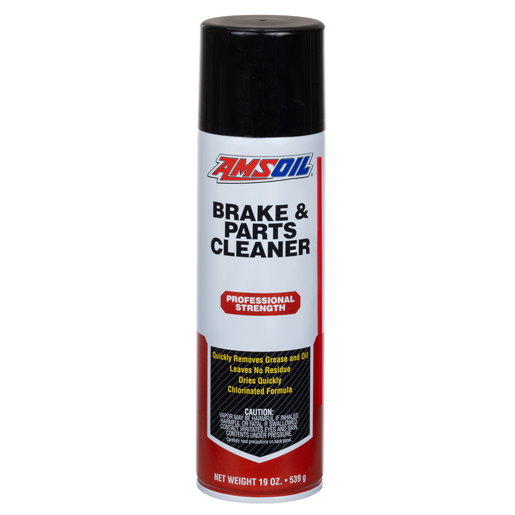
AMSOIL BRAKE AND PARTS CLEANER
Chlorinated, non-flammable brake cleaner that cuts oil and grease off pads, calipers, and drums without pulling the whole assembly apart.
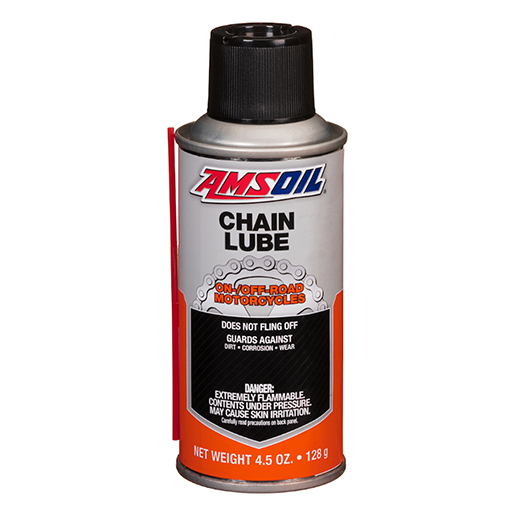
AMSOIL CHAIN LUBE
Fast-drying aerosol that soaks into the pins, bushings, and rollers on a sealed chain, then sets into a film that shrugs off sand and grit.
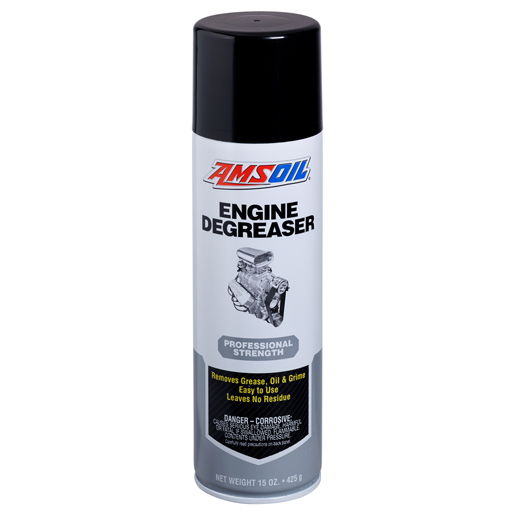
AMSOIL ENGINE DEGREASER
Professional-strength aerosol solvent that breaks down cooked-on engine grime in 15 minutes and rinses off with plain water, no parts washer needed.