
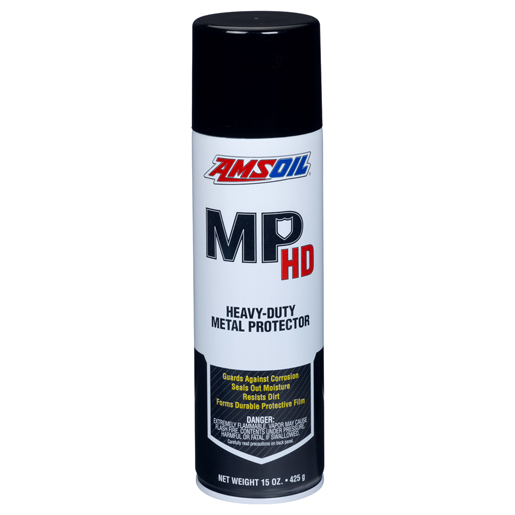
AMSOIL HEAVY-DUTY METAL PROTECTOR
Product codes and package options
| Product Code | Package Size | Unit of Measure |
|---|---|---|
| AMHSC-EA | 15 oz. Spray Can | Each |
| AMHSC-CA | 15 oz. Spray Can | Case of 12 |
Salt, road spray, and a wet season parked outside are what kill a trailer frame, a plow mount, or a set of battery terminals. AMSOIL Heavy-Duty Metal Protector sprays on and leaves a dry, wax-like amber film that pushes water off the metal and seals it against intrusion, and that film can hold for several years depending on where the equipment lives and how hard it works. Steel, iron, aluminum, brass, and copper all take it, so a mixed assembly gets one product instead of three. Clean the metal, lay the coating on evenly, then give it two hours to dry and 12 hours to cure before the equipment goes back to work.
The hardware that takes the worst of it
The target list is refreshingly concrete: trailer and automotive undercoat, spare tire carriers, battery terminals, tailgate hinges, hand tools, snow plows, mower decks and blades, snowblowers, skid-steer attachments, farm machinery, fork lifts, and metal gates or fences. Every one of them lives outside or under a vehicle.
Sort that by exposure and you get road-salt hardware, ground-contact implements, and equipment that sits idle through a wet season. Protecting metal from water, salt, and high humidity is the common thread, and that describes exactly what a trailer frame faces between November and April where the roads get salted.
Steel, iron, aluminum, brass, and copper are all fair game, which matters on an assembly where a steel frame carries aluminum brackets and brass or copper fittings. One can covers the whole thing instead of forcing you to treat each metal separately.
It dries amber, and that is a decision
The film is amber and wax-like rather than clear, so a treated part changes color for as long as the protection lasts. That is a choice, not a flaw. Frame rails, hitch hardware, plow mounts, and undercarriage metal wear it without anyone ever noticing.
Polished surfaces, show finishes, and bright hardware that has to look untouched are poor candidates, so settle the appearance question before you spray rather than after. AMSOIL Heavy-Duty Degreaser is what takes overspray back off, and whatever surface receives that degreaser needs a compatibility check of its own.
Durability is the payoff. The film does not wear off easily, it displaces water, it seals equipment against water intrusion, and it protects for up to several years depending on the application and the environment. A coating that survives a season of road spray and grit outlasts any paint touch-up.
Clean metal, even coverage, and the 12-hour cure
Shake the can and clean the area first. Spray a corrosion inhibitor over dirt and loose scale and it bonds to the debris instead of the metal, so your prep decides how long the film actually lasts. Lay it down uniformly rather than in heavy patches.
The extension straw handles the tight spots and pushes product into places you cannot otherwise reach, which is how one can serves as both a trailer undercoat and a battery terminal treatment. On a vertical surface, even coverage beats thickness, since excess just runs off before it sets.
Allow two hours to dry and, for best results, 12 hours to cure. Those are two different states: the surface stops being wet at two hours, and the film reaches full durability at twelve. Treat the machine the evening before you need it and both windows pass while you sleep.
Ten days in a five percent salt bath
Three aluminum pieces and three steel pieces were coated on their lower halves and left bare on top, alongside untreated aluminum and steel controls. All of them went into a 5 percent saltwater bath for one hour, came out, and dried for 23 hours, and that cycle ran for 10 days.
At the end, the coated portions showed no signs of corrosion. The bath used the same salt and a similar solution to what your equipment meets on winter roads, which is what makes the result mean something for a trailer, a plow, or a machine hauled behind a truck in February.
The wet and dry alternation matters as much as the salt itself. Metal held under water corrodes differently than metal soaked and dried over and over, and the second pattern is what a trailer frame actually goes through across a salted winter.
Flammability, storage, and what you can buy
Contents form an extremely flammable aerosol, with a flash point estimated at -104.4°C (-156°F) that reflects the propellant rather than the amber fluid it carries. Keep heat, hot surfaces, sparks, and open flames clear, skip smoking near the work, and never spray toward an ignition source.
Store the pressurized can locked up, out of sunlight, and below 50°C (122°F), and never pierce or burn it. A treated machine sitting in the sun is fine; the can that treated it is not, and a closed truck bed in August passes that limit before lunch. Prolonged exposure damages organs and the product may be fatal if it enters your airways, so stay out of the mist on a long undercoating session.
AMHSC-EA is the single 15 oz. can and AMHSC-CA the case of twelve. One can covers a plow mount, a hitch, and a set of battery terminals, while the case suits an operation coating a row of implements before winter. The product is not available in Canada, and Proposition 65 information applies.
Questions about AMSOIL HEAVY-DUTY METAL PROTECTOR
Steel, iron, aluminum, brass, copper, and other metal surfaces, so a mixed assembly takes one product. The bigger question is usually appearance rather than metal, since the film dries amber and stays visible as long as it protects. Hidden structure wears it without any issue.
Two hours to dry and, for best results, 12 hours to cure. Those are different states: the surface stops being wet at two hours, while the film reaches full durability at twelve. Treat the plow or trailer the evening before you need it and both windows pass overnight.
No. It leaves an amber, wax-like film that stays visible, which is why appearance belongs in the decision before you spray. Frame rails, hitch hardware, and undercarriage metal carry it fine. AMSOIL Heavy-Duty Degreaser removes overspray, and that surface needs its own compatibility check.
Up to several years depending on the application and the environment. The film resists wear, displaces water, and seals equipment against water intrusion, so as long as it stays on, it works. Hardware under a trailer on salted roads works it far harder than a gate hinge does.
Aluminum and steel pieces coated on their lower halves went into a 5 percent saltwater bath for one hour, then dried for 23 hours, with that cycle repeated for 10 days. The coated portions showed no signs of corrosion, and the bath used salt similar to what equipment meets on winter roads.
Locked up, out of sunlight, below 50°C (122°F), and away from heat, hot surfaces, sparks, and open flames. Contents form an extremely flammable aerosol and the can is pressurized, so it never gets pierced or burned, even empty. A closed truck bed in summer blows past that limit.
Related products in this category
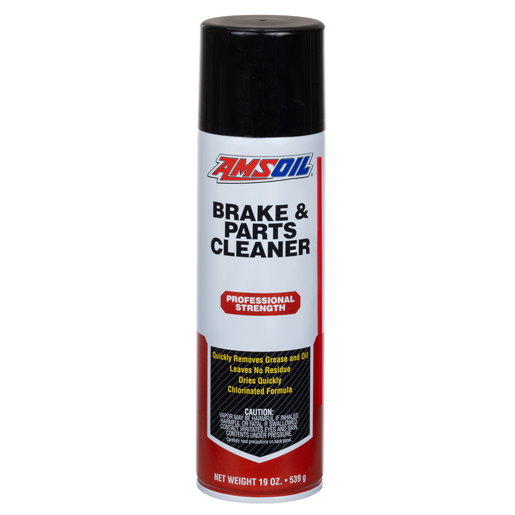
AMSOIL BRAKE AND PARTS CLEANER
Chlorinated, non-flammable brake cleaner that cuts oil and grease off pads, calipers, and drums without pulling the whole assembly apart.
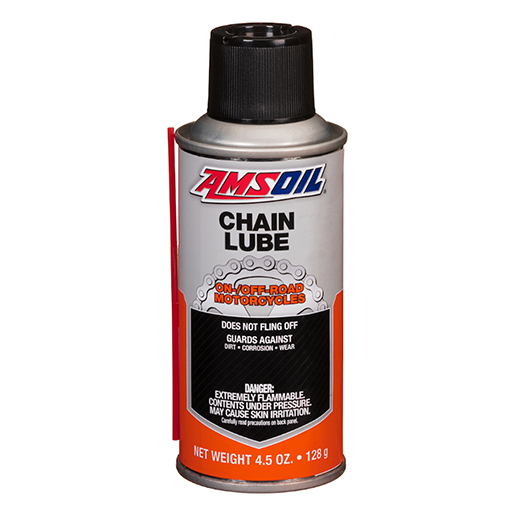
AMSOIL CHAIN LUBE
Fast-drying aerosol that soaks into the pins, bushings, and rollers on a sealed chain, then sets into a film that shrugs off sand and grit.
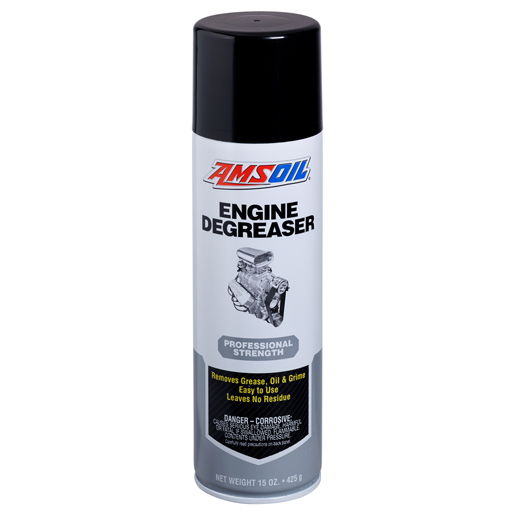
AMSOIL ENGINE DEGREASER
Professional-strength aerosol solvent that breaks down cooked-on engine grime in 15 minutes and rinses off with plain water, no parts washer needed.