
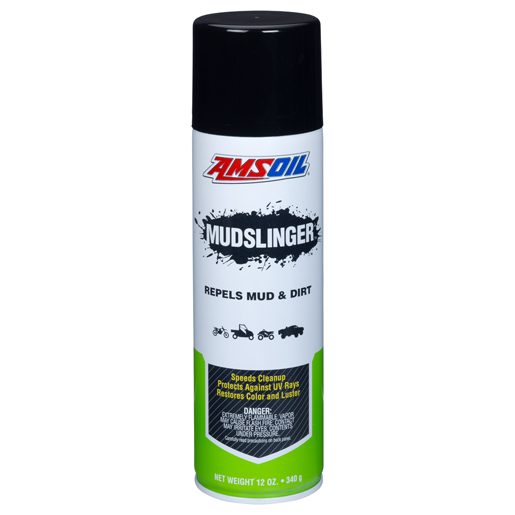
AMSOIL MUDSLINGER MUD AND DIRT REPELLENT
Product codes and package options
| Product Code | Package Size | Unit of Measure |
|---|---|---|
| AMSSC-EA | 12 oz. Spray Can | Each |
| AMSSC-CA | 12 oz. Spray Can | Case of 12 |
Mud that packs into a fender well and dries there costs you an hour at the wash rack and takes decals with it. AMSOIL Mudslinger® Mud and Dirt Repellent lays a non-stick layer of armor over plastic, fiberglass, and painted surfaces so mud, dirt, and snow slide off instead of building up, and what does stick comes away with low-pressure water. The same coating fights ultraviolet damage while it restores, cleans, and shines the panels it covers. Start with clean, dry surfaces, give it 15 minutes to dry, and keep it completely off pedals, seats, brakes, and brake assemblies.
Spray it before the ride, not after
This is prep, not cleanup. A non-stick layer only helps if it is already on the machine when the mud shows up, which puts the job in the same category as coating a plow blade before the storm rather than chipping it clean afterward.
You collect on that at the wash rack. Mud and dirt release with low-pressure water, and that matters because high-pressure water pointed at bearings, seals, and decals creates a whole new set of problems. Needing less pressure means cleaning the machine costs you less.
Plastic, fiberglass, and painted panels
Three materials define where it goes: plastic, fiberglass, and painted surfaces. Between them that is most of the visible area of a modern quad, side-by-side, or dirt bike, including fenders, hoods, side panels, and painted frame sections, which happens to be exactly where mud packs on hardest.
Restoring, cleaning, and shining those panels comes along with the same pass. Faded plastic on a machine that has spent a few seasons outside responds to it, so the barrier and the cosmetic improvement show up together instead of costing you two products and two afternoons.
The four places it must never go
Pedals, seats, brakes, and brake assemblies are off limits, and there is no soft version of that rule. A non-stick coating on a foot control or a seat takes away grip exactly where you need it, and on a brake assembly it works against the friction that stops the machine.
The exclusion holds even where those parts sit right against a surface you do want treated. A painted frame section next to a brake caliper is a legitimate target and the caliper is not, so a controlled spray pattern and a hand shielding the brake hardware are worth the extra minute.
Clean, dry, then 15 minutes
Wash and dry the panels before you spray anything. A repellent laid over existing mud bonds to the mud instead of the panel, and the first wash takes the whole coating off along with the dirt. Shake the can, then spray evenly and liberally across the surfaces you picked.
Give it 15 minutes to dry before you handle the machine. That window fits neatly between loading the trailer and pulling out of the driveway on the morning of a ride, so it rarely costs you anything at all.
Wipe it for shine or leave it for armor
Two finishes come out of the same can. Wipe the excess off with a lint-free microfiber towel after the drying window and you get a brilliant shine, which suits moderate conditions or a machine that is going to be parked where people look at it.
Leave it wet and unwiped and you get an extra barrier against mud and snow for a day that ends in a bog or a snowbank. The trade-off is stated plainly: left wet, it may attract dust, so pick the finish based on the day rather than defaulting to one.
Contents form an extremely flammable Level 3 aerosol with gas under pressure that may explode if heated, and the clear liquid carries a cherry scent. Keep heat, sparks, flames, and hot surfaces clear, never pierce or burn the can, and keep it under 50°C (122°F). AMSSC-EA is the 12 oz. can and AMSSC-CA the case of twelve, and distribution does not include Canada.
Questions about AMSOIL MUDSLINGER MUD AND DIRT REPELLENT
Plastic, fiberglass, and painted surfaces on quads, side-by-sides, and dirt bikes, which covers most of the visible area of a modern machine including fenders, hoods, and side panels. Pedals, seats, brakes, and brake assemblies are excluded outright, even where they sit right against a treatable surface.
Yes. Clean and dry the panels before you spray. A repellent applied over existing mud bonds to the mud instead of the panel, so the first wash carries your coating away with the dirt it was supposed to release. Shake the can and spray evenly and liberally once it is clean.
Fifteen minutes after an even, liberal application. That window sits between spraying and handling the machine, and it fits between loading the trailer and pulling out. After that you either wipe the excess for a shine or leave it in place for a heavier barrier.
Depends on the day. Wiping with a lint-free microfiber towel gives a brilliant shine and suits moderate conditions. Leaving it wet gives an extra barrier against mud and snow for a rougher ride. Left wet, it may attract dust, which is the trade-off you are making.
A non-stick layer removes grip where you depend on it and works against friction where the machine depends on it. Pedals, seats, brakes, and brake assemblies are excluded for that reason, and the rule holds even when they sit against plastic, fiberglass, or paint you do want coated.
Mud and dirt come off a treated surface with low-pressure water. That matters because high-pressure water aimed at bearings, seals, and decals causes its own damage on a quad, so needing less pressure lowers the risk of the wash itself. The coating also fights ultraviolet damage between rides.
Related products in this category
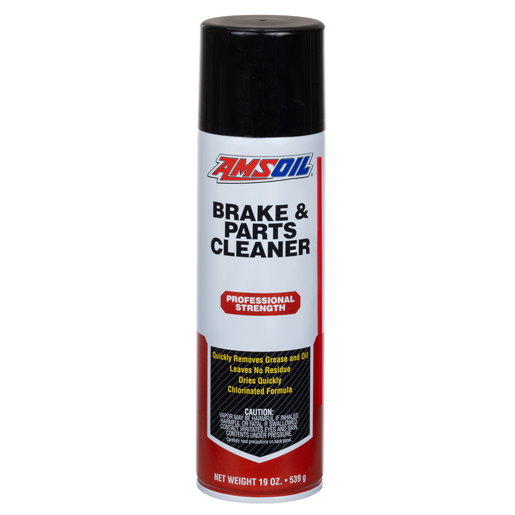
AMSOIL BRAKE AND PARTS CLEANER
Chlorinated, non-flammable brake cleaner that cuts oil and grease off pads, calipers, and drums without pulling the whole assembly apart.
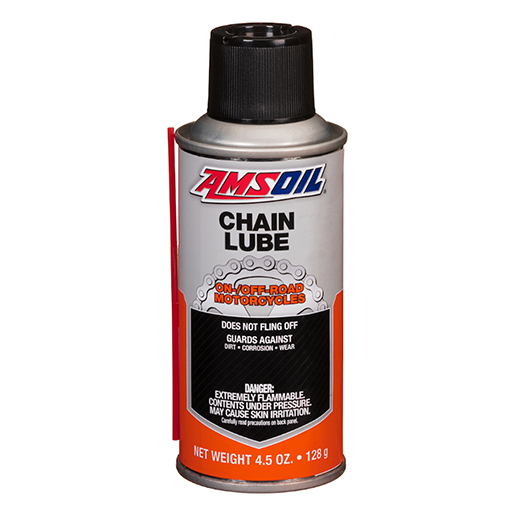
AMSOIL CHAIN LUBE
Fast-drying aerosol that soaks into the pins, bushings, and rollers on a sealed chain, then sets into a film that shrugs off sand and grit.
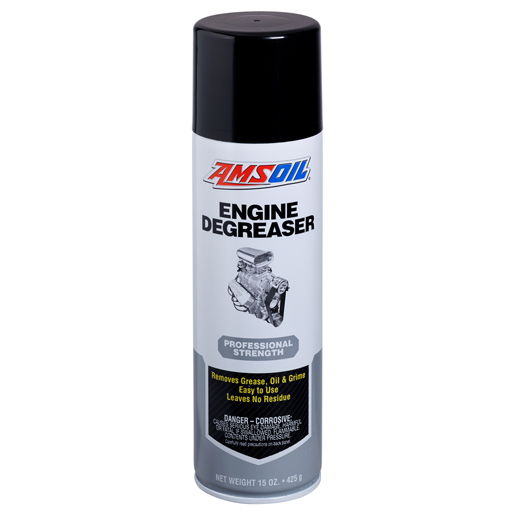
AMSOIL ENGINE DEGREASER
Professional-strength aerosol solvent that breaks down cooked-on engine grime in 15 minutes and rinses off with plain water, no parts washer needed.