
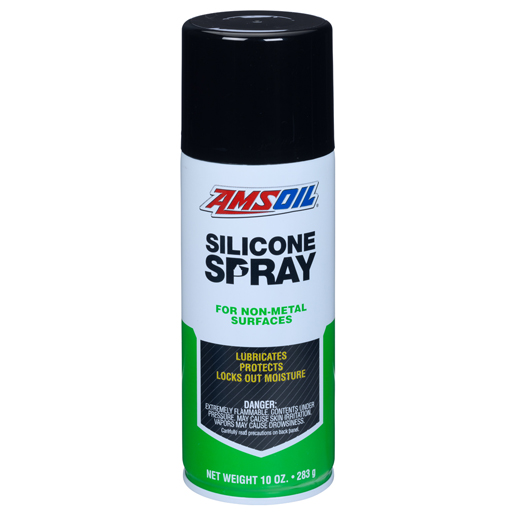
AMSOIL SILICONE SPRAY
Product codes and package options
| Product Code | Package Size | Unit of Measure |
|---|---|---|
| ALSSP-EA | 10 oz. Spray Can | Each |
| ALSSP-CA | 10 oz. Spray Can | Case of 12 |
Grease belongs on some parts and ruins others, and rubber, vinyl, and fabric fall squarely in the second group. AMSOIL Silicone Spray puts down a dry lubricating film built for surfaces that oil or grease may damage. It goes on clear, odorless, and nonstaining, locks out moisture, dries fast, and refuses to collect dust or dirt, so the part you treated stays clean instead of turning into a grit magnet. Rubber, nylon, plastics, upholstery, vinyl, wood, cardboard, fiberglass, and other nonmetal surfaces are all in range, along with metal that contacts them. The nonstaining formula also waterproofs leather boots, shoes, jackets, and suede.
The nonmetal line and what sits on each side
Rubber, nylon, plastics, upholstery, vinyl, wood, cardboard, and fiberglass are all inside the range, along with other nonmetal surfaces. Metal only enters the picture where it touches something nonmetal, and that boundary is what the formula was written around rather than a footnote tacked on at the end.
That distinction matters more than it sounds. A metal-on-metal load point, a wheel bearing, or a chain drive falls outside no matter how convenient the can is sitting there, and matching the material is a starting point rather than proof that a silicone film belongs on that particular seal, slide, or pivot.
Where grease is the problem, not the fix
The dry film exists for surfaces that grease or oil may damage. That is why a rubber seal, a vinyl panel, or a fabric strap usually calls for something other than an oil, even when an oil would cut friction perfectly well for a week.
Not attracting dust is the other half of the case. Grease a pivot on a machine used outdoors and it collects grit within one ride, while a dry film keeps the part contaminant-free, which counts on a slide or a latch where a paste of dust and lubricant binds the very thing you were trying to free.
Rubber life and moisture control
Helping prevent rubber from drying and cracking deals with how exposed rubber ages rather than how it wears. Seals, grommets, and boots that live through summer heat and winter cold lose flexibility and split, and a film sitting on the surface slows that down on parts nobody thinks about until one fails.
Locking out moisture works alongside it. Water standing in a rubber-to-metal joint or wicking into fabric starts a second set of problems, and the same clear film keeps it off. Both effects come from a coating that dries fast and stays where you put it.
Leather, suede, and the color question
The nonstaining formula makes it effective for waterproofing leather boots, shoes, jackets, and suede, which takes the can past the machine and into the gear hanging in the garage. Wet boots on a cold ride are a comfort problem and a durability problem showing up at the same time.
Test leather and other sensitive surfaces on a small area first. It will not damage leather, but it may slightly alter the color or hue, so a hidden section of a boot or the inside of a jacket panel answers that question before you treat something you have to look at.
Ventilation, storage, and packaging
Vapor pressure runs 3,240 to 3,930 hPa at 20°C and roughly doubles to 7,239 to 7,928 hPa at 54°C, which is the clearest reason to keep the can below 50°C (122°F) and out of direct sun. Flash point is estimated at 104°C (219.2°F) with flammability limits of 3.9 to 16.9 percent by volume.
Contents form an extremely flammable aerosol, so get the special instructions and read the safety precautions before you handle it. Work outdoors or somewhere well ventilated, clear of heat, hot surfaces, sparks, and open flames. It irritates skin, is suspected of damaging fertility or the unborn child, can cause drowsiness or dizziness, and may be fatal if swallowed and it reaches your airways, so wash up thoroughly afterward.
Proposition 65 information applies and names hexane and benzene, while the carcinogen classification does not apply because the product contains less than 3 percent DMSO extract by IP 346. Never pierce or burn the pressurized can, send contents and container to an approved waste disposal plant, and keep it away from drains. ALSSP-EA is the 10 oz. can and ALSSP-CA the case of twelve, and distribution does not include Canada.
Questions about AMSOIL SILICONE SPRAY
Rubber, nylon, plastics, upholstery, vinyl, wood, cardboard, and fiberglass are named, along with other nonmetal surfaces and any metal that contacts them. A metal-on-metal load point such as a wheel bearing or a chain drive falls outside that range no matter how handy the can happens to be.
A clear, odorless, nonstaining film that dries fast, locks out moisture, and does not attract dust or dirt, so the treated part stays clean. That last part is the real difference from grease on a machine used outdoors, where a tacky film picks up grit inside one ride.
Yes. The nonstaining formula waterproofs leather boots, shoes, jackets, and suede. Test leather and sensitive surfaces on a small area first, because it will not damage leather but may slightly alter the color or hue, and a hidden spot answers that before you hit a visible panel.
No. It is built for nonmetal surfaces and for metal that contacts them, so a metal-to-metal load point is outside its range. Its edge shows up on materials that grease or oil may damage, and on any spot where a dry film that rejects dust beats a tacky one that collects it.
Outdoors or somewhere well ventilated, clear of heat, hot surfaces, sparks, and open flames, with no smoking nearby. Get the special instructions and read through the safety precautions before you handle it, and wash your face, hands, and any exposed skin afterward.
Keep it out of sunlight and below 50°C (122°F), since vapor pressure roughly doubles between 20°C and 54°C. Never pierce or burn the pressurized can, even empty. Contents and container go to an approved waste disposal plant, and both aquatic hazard statements are reason enough to keep it away from drains.
Related products in this category
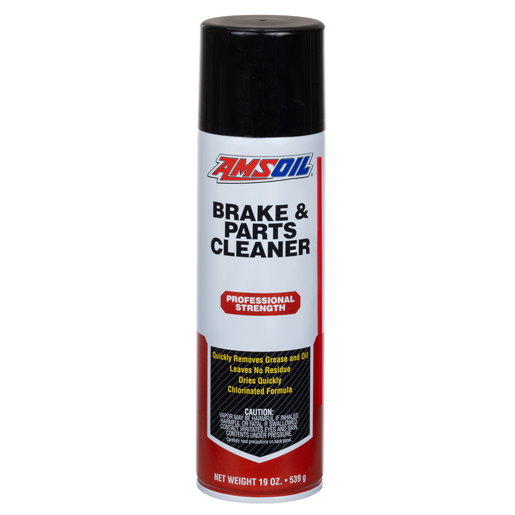
AMSOIL BRAKE AND PARTS CLEANER
Chlorinated, non-flammable brake cleaner that cuts oil and grease off pads, calipers, and drums without pulling the whole assembly apart.
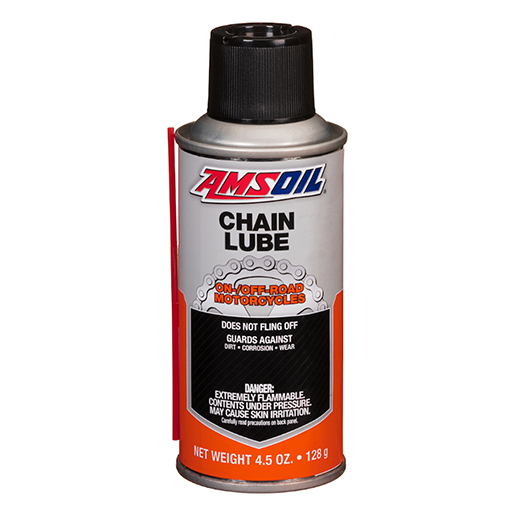
AMSOIL CHAIN LUBE
Fast-drying aerosol that soaks into the pins, bushings, and rollers on a sealed chain, then sets into a film that shrugs off sand and grit.
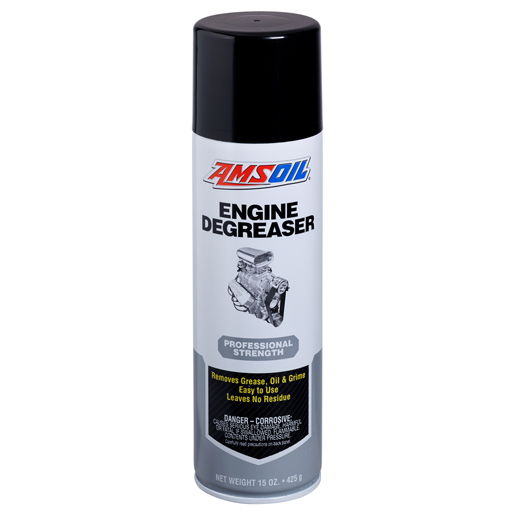
AMSOIL ENGINE DEGREASER
Professional-strength aerosol solvent that breaks down cooked-on engine grime in 15 minutes and rinses off with plain water, no parts washer needed.